By the FTC guidelines, I'm required to inform you that some of the links may be affiliate links. When this is the case, if you PURCHASE products through these links, then I receive a (really modest) commission. This blog is independently owned and the opinions expressed here are my own.
“Vacation mode” — light, with some real notes on architecture and a couple of other people’s opinions to counterpoint my voice.
With this heat — when everything, quite literally, melts — everyone is looking for shelter somewhere. Some by the sea, some by the lake, some with their own clever tricks (share yours in the comments: how do you beat the heat?).
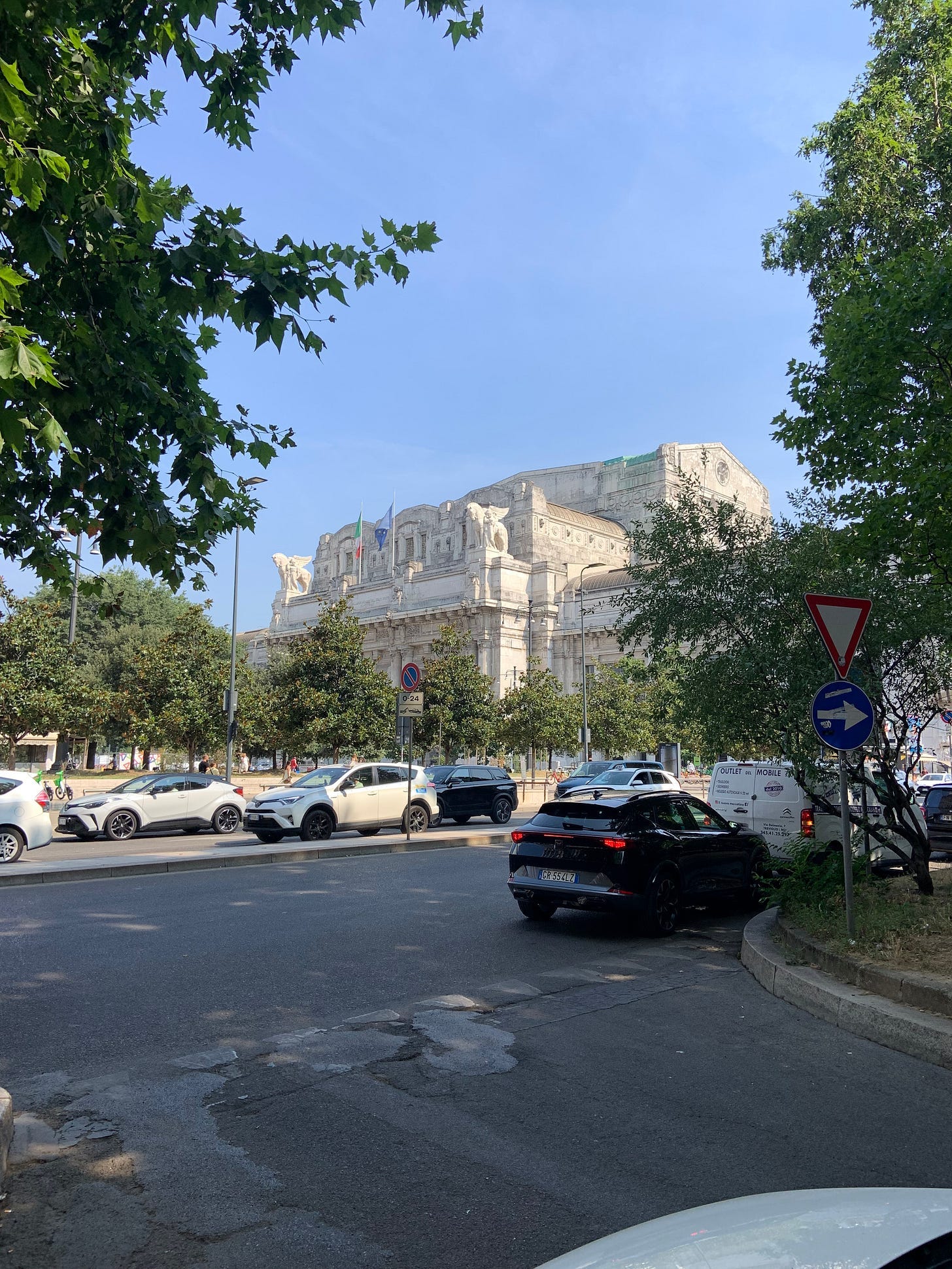
I decided to take a break from my usual “investigations” and simply stroll with you through Milano Centrale, the main railway station of Milan, taking in the Mussolini-era architecture and the general tourist traffic.
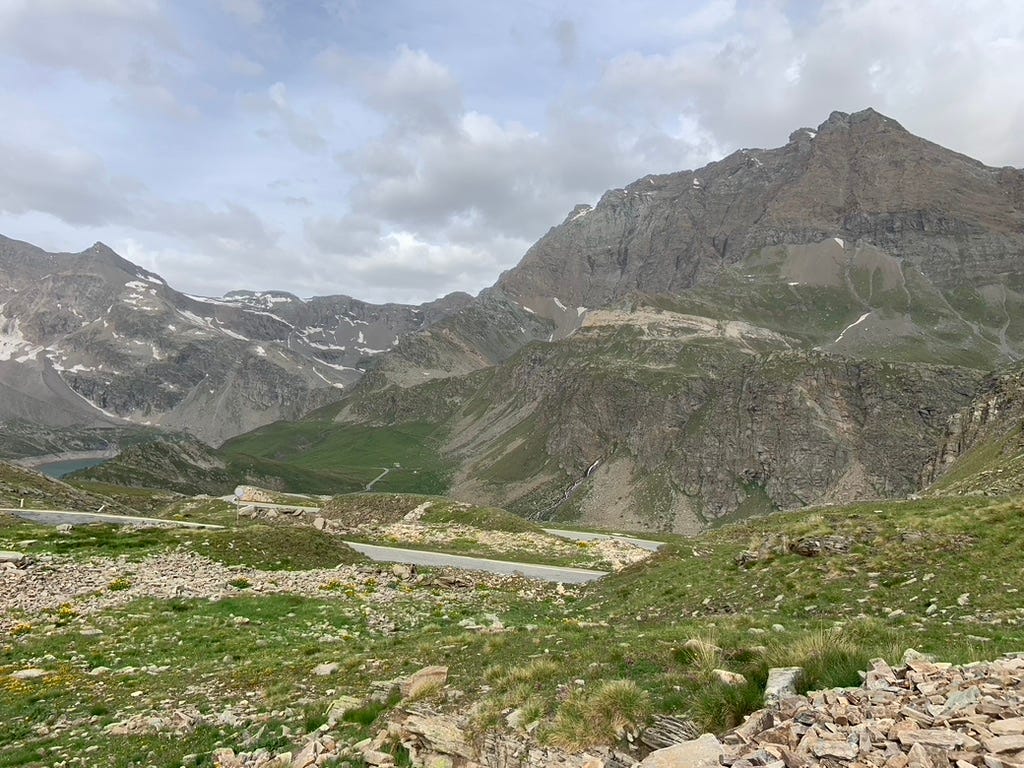
Near the pass and along the mule tracks leading up from Ceresole Reale, it is still possible to identify the ruins of the former barracks and stone military posts, - and the engravings
When the waiting finally ended
There’s a second date worth setting beside Chaberton’s, further along the same wall of concrete and silence, three years later. On the night of 8–9 September 1943, hours after Italy’s armistice with the Allies was announced, a GAF colonel named Giovanni Jon — a Piedmontese, in command at Tarvisio on the wall’s opposite end, facing not France but the sudden, unwanted new enemy of Germany — sounded the alarm and gathered his men on the barracks square. He read them Marshal Badoglio’s proclamation and told them, in effect, that their war was starting now. None of the roughly three hundred men present objected. They held the position against an attacking Waffen-SS regiment for six hours. Twenty-four of them died there; forty-eight more were wounded.
Emotional toll of Alpine Warfare. Look up. The mountains before you represent more than just indescribable beauty. They represent the pain and toil of their defenders.
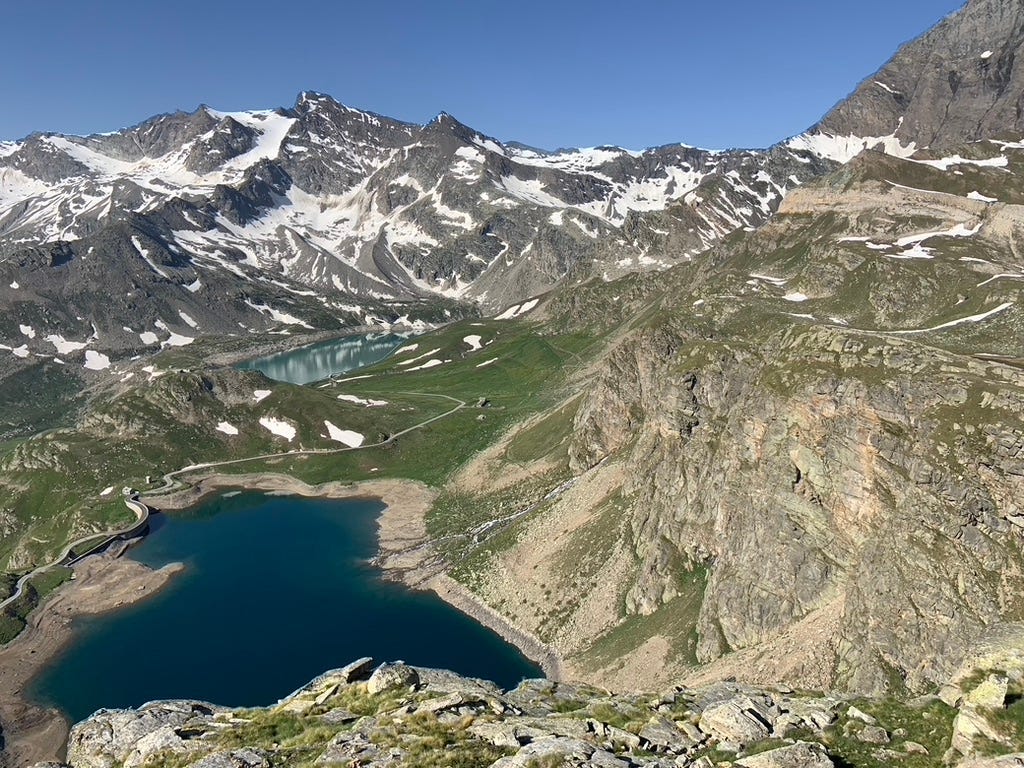
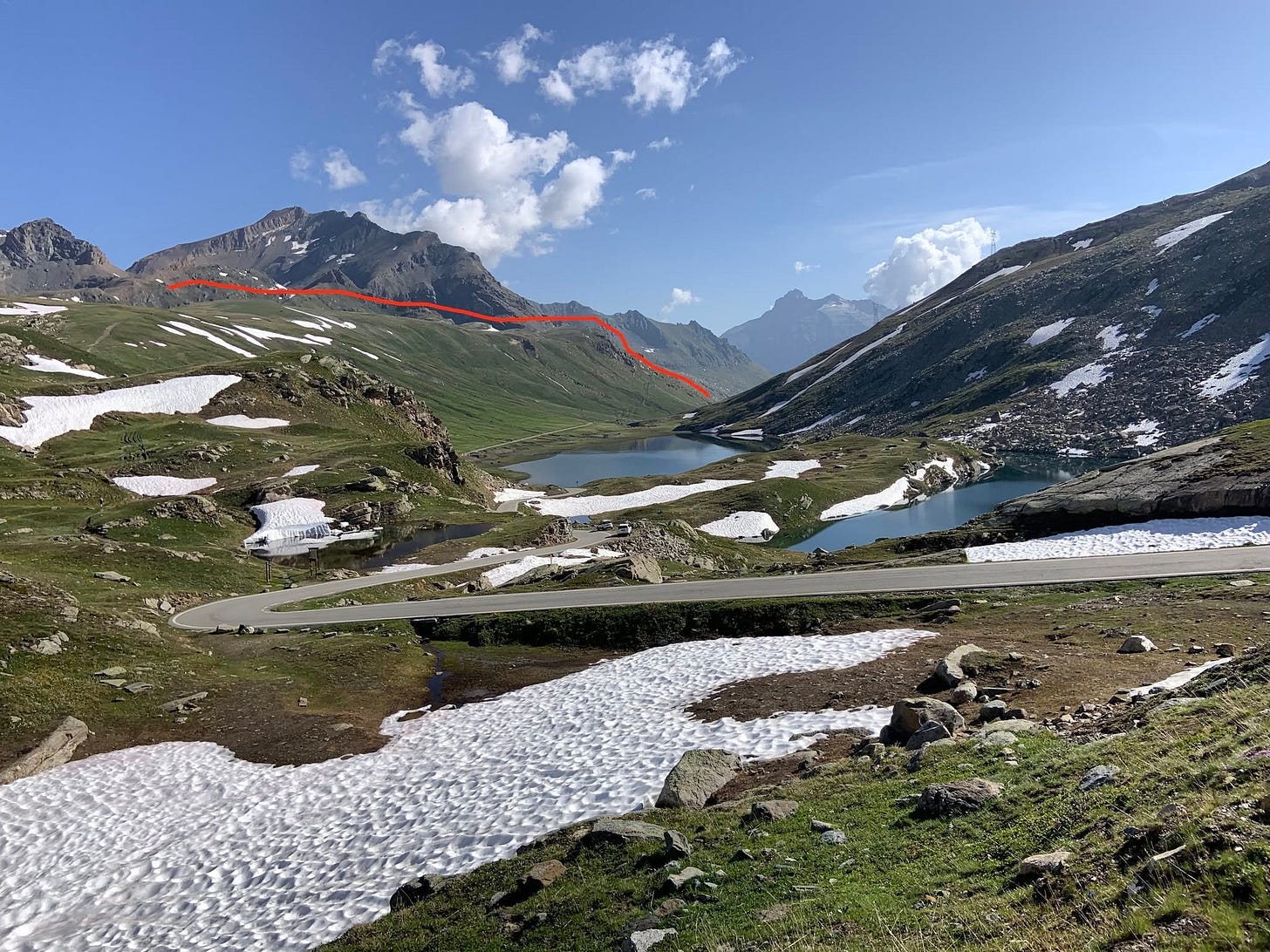
Above Lago Agnel, at 2,300 metres, the ground stops pretending to be gentle. To the right, Punta Violetta climbs to 3,031 metres. To the left, lower and less dramatic, Colle Agnel sits at 2,510.
And somewhere between the two, tucked along the old military track before the Colle del Nivolet, a square of broken stone and concrete is still holding its shape against the mountain.
It doesn’t look like much. A collapsed wall here, a firing slit there, half-buried in rock that the retreating glaciers polished smooth ten thousand years before anyone thought to build on it. You could walk past it and mistake it for a shepherd’s ruin. It is, in fact, a listening post — a small fragment of one of the strangest defensive projects Italy ever attempted: the Vallo Alpino del Littorio.
A wall that was never tested
In 1931, with the memory of the First World War still raw and the newly built Maginot Line rising across the French border, Mussolini’s general staff ordered the construction of a defensive system that would eventually stretch the length of Italy’s Alpine border — from Ventimiglia on the Ligurian coast to Fiume on the Adriatic. It was meant to make the frontier, in the language of the original directives, “hermetic.” Impenetrable.
A classic survival yarn: the mountain has been testing people who think they own a piece of it
Up on the plateau, where everyone goes, there are lakes scattered everywhere. Normal people climb up from Rifugio Savoia and walk straight ahead, toward whichever lake the trail signs point to that day.
I, as usual, did not do what normal people do. I decided I wanted to see the other lakes — the ones off to the right, the ones nobody mentions.
It seemed only fair to start at the rifugio, since the rifugio itself is not quite what it looks like. Today, it’s a place where you buy a coffee and a slice of cake before a hike. A century and a half ago, it was a royal hunting lodge — one of the wooden houses Vittorio Emanuele II had built across this plateau in the 1860s, after declaring the entire Gran Paradiso massif his private hunting reserve. The king wanted the ibex for himself, and he wanted it badly enough to ban anyone else from touching it. It is one of those details history hands you for free: the same selfish decree that let one man shoot as many ibex as he liked is the reason the species survived at all, while it vanished from the rest of the Alps.
This is the story that transforms a mystical, dark legend into something even more disturbing, because it removes the supernatural and replaces it with reality, which is worse. MUCH worse.
There is a place in Piedmont where the name itself cannot make up its mind.
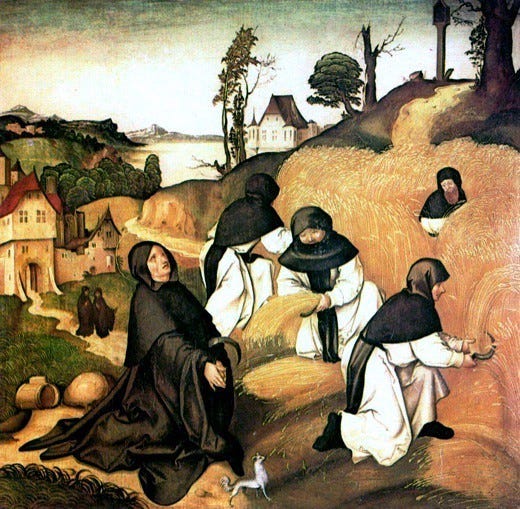
Lucedio. Say it slowly. Luce — light. From the Latin lux, the same root that gave us Lucifer, the morning star, the bringer of light, before he fell. The monks who arrived here in 1123 preferred a gentler etymology: lucus Dei, the grove of God. A sacred clearing in the wilderness.
They had come from Burgundy, from the monastery of La Ferté, and they were Cistercians — the reformers, the disciplinarians, the White Monks who had founded their order precisely because other monasteries had grown slack and worldly. They believed in silence, manual labour, and the absolute primacy of prayer. They were, by all accounts, serious people.
Choosing between a big city and a small town in Italy involves significant trade-offs regarding cost, career opportunities, and social integration. Here: Confrontation outlines of pros and cons
Two kinds of expats move to small-town Italy. The ones who romanticise it so hard they forget to check whether there’s a pharmacy within 30 kilometres. And the ones who actually stick around.
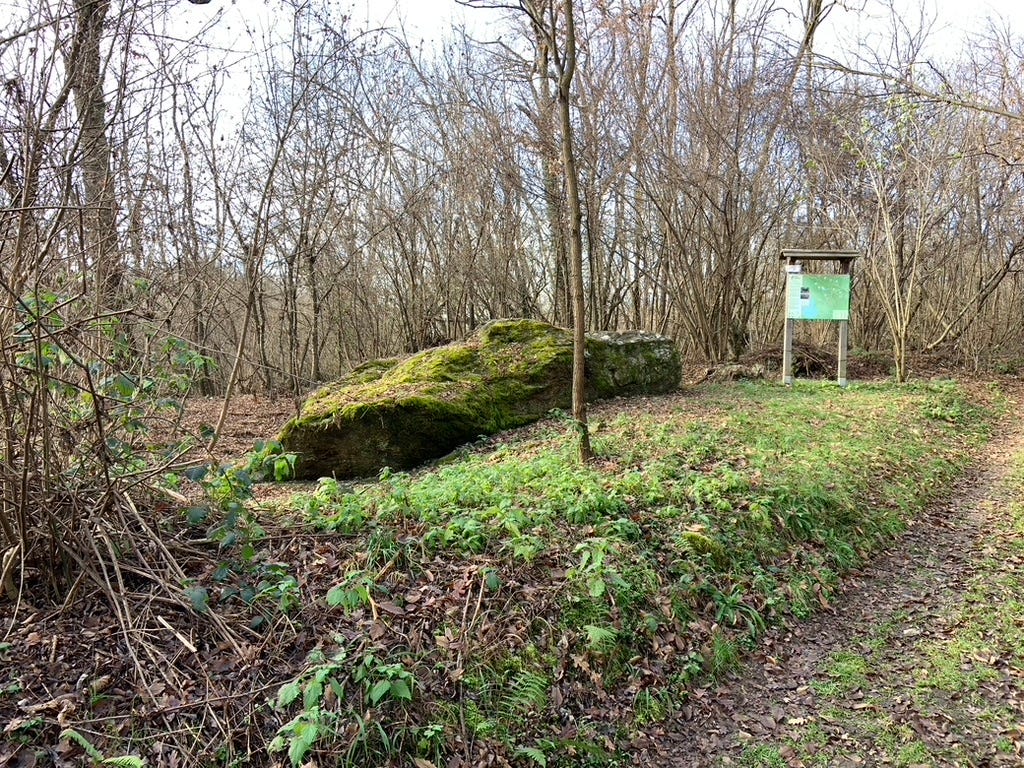
I’ve been living in this area for a few years now, and I’ll be honest: I go out alone most of the time. I called a friend to come with me to see a menhir in Mazzè last week. She wasn’t feeling well. Called another. Too busy. I didn’t even call the third one because I already know that her partner, now retired and living with her, doesn’t look favorably on her friends.
This is not a complaint — it’s just the reality of adult social life, anywhere in the world. The difference is that in a small Italian town, the loneliness can hit harder when you don’t speak the language yet, and the community feels impenetrable. But it’s not, and Mazzè is actually only a good example to speak of why.
The Rise and Hollow Fall of the Frichignono. Much more than just a name in a dusty ledger.
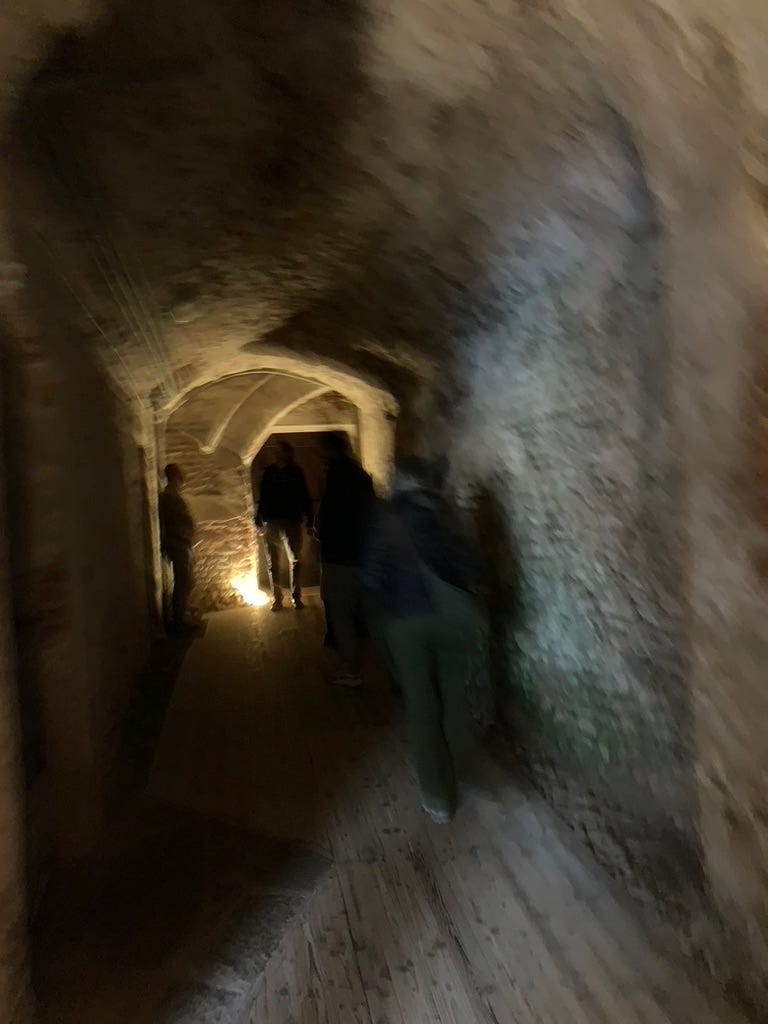
The tunnel does not merely lead you underground; it swallows you.
The vaulted stone ceiling presses down with the weight of a thousand years, the air turning cold and damp — the temperature of a held breath.
Ahead, a dim amber glow flickers; behind you, a darkness so thick and deliberate it feels like a physical presence. You find yourself walking faster. Everyone does. This is where the castle keeps its oldest secrets, and in Castellengo, secrets have a habit of refusing to stay buried.
The stones here have been watching people arrive since the Middle Ages, but they learned a different kind of silence after the Frichignono arrived. As you walk, the echo of your own footsteps begins to drift. The rhythm falters. It’s a classic trick of the acoustics — or perhaps it’s the sound of the fourteen original noble clans who were slowly, methodically bled out of their inheritance to make room for one name.
Historical detective: a silent record left by women who had no other voice.
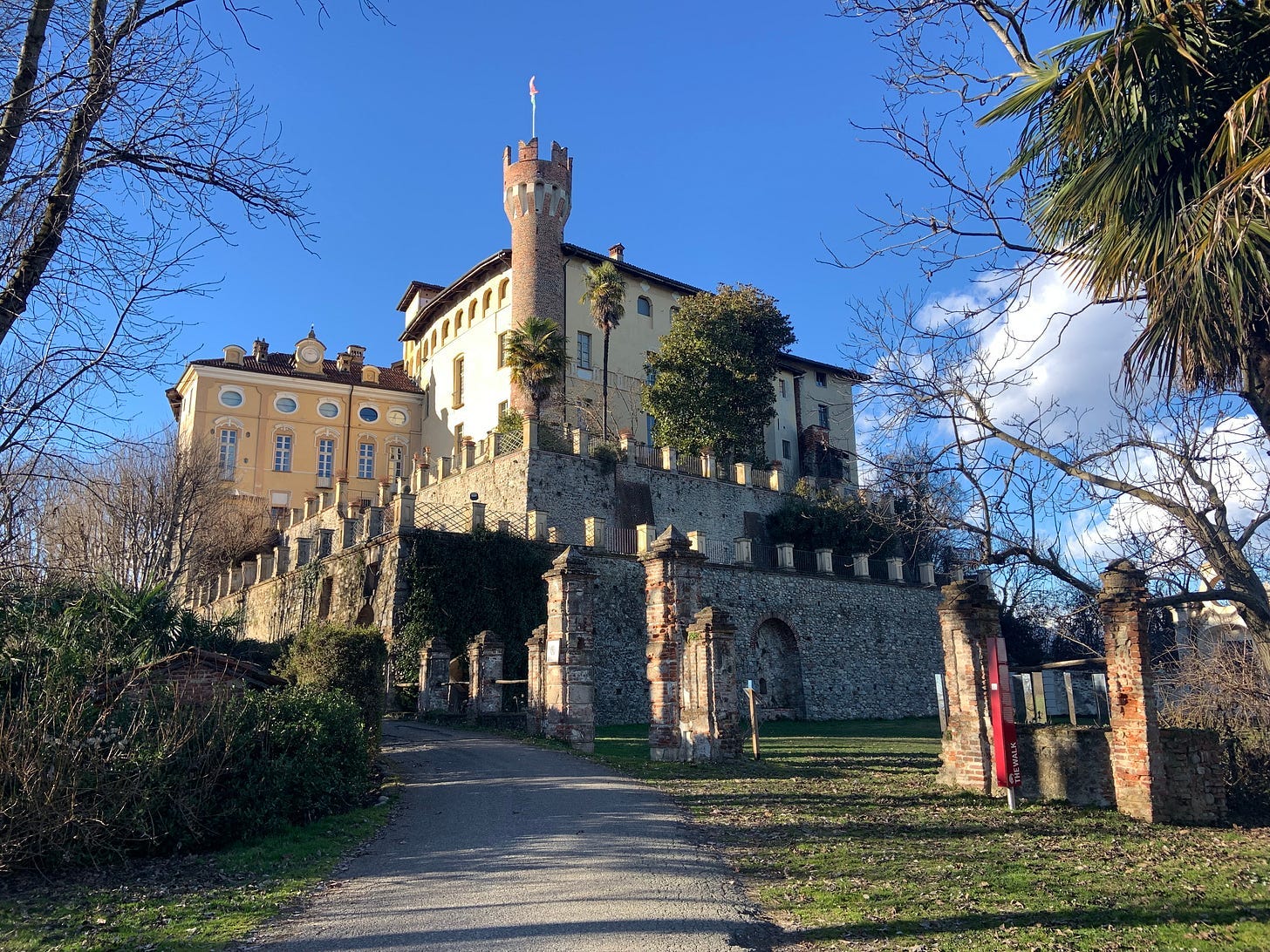
Stand on the hill of Castellengo Castle and look down. The plain spreads out endlessly before you, flat and quiet.
But look closer, just below the castle hill: there is a church. The Church of Saints Peter and Paul sits there as it has for centuries, and even from a distance, something about it feels odd. Its back faces the road. It turns away from you, as if keeping a secret.
That oddness is, in fact, a very precise statement.
Churches were built for people who could not read. Every stone, every orientation, every image was a lesson written in a language older than words. This one follows the ancient rule: the altar faces east, toward the rising sun at dawn. Because Christ was imagined as the sun, the light that conquers darkness. So the faithful entered from the west, from shadow, from what the builders called death, and walked forward toward the light. The door was never meant to face the road. It was meant to face the dark.
Before the tourists arrive and the season truly begins, Italy belongs, for a few precious days, to its farmers. Every spring, Italy exhales. And somewhere in that first warm breath, you will find a farmer’s fair.
There is something quietly magical about the agricultural fairs that mark the arrival of spring in Italy.
Long before the first warm days settle in, farmers begin preparing — combing, grooming, loading their most prized animals into trailers — and the whole countryside seems to hold its breath in anticipation.
The undisputed stars of these fairs are the cows. They arrive knowing their worth. Washed with the finest shampoos, udders carefully tended, coats brushed until they gleam — they carry themselves with the serene dignity of royalty, because that is exactly what they are here. They nuzzle each other, accept affection without fuss, and survey the crowds with calm, dark eyes that seem to say: yes, this is all for us.
Every castle has its ghost. At Castellengo, the ghost isn’t a specter drifting through corridors in the small hours — it’s a political tragedy, sealed into the limestone like a man walled up alive.
Before the grand balconies, before the cellars heavy with wine, there was only a cliff, a river, and a man with a loyalty that would cost him everything.
Part I: The Exile’s Gamble — From the Tiber to the Alps
The story does not begin here.
It begins five hundred kilometers to the south, in the sun-hammered hills of Umbria, where a man named Alberico stood in the shadow of the Castello di Monterone and grasped, with the cold clarity that only younger sons ever know, that none of this would ever be his.
Life in Italy was never easy. Virtually every place and every period could be included in a survival manual. Let's talk about castle secrets again. Once upon a time, there was a castle...
“How do we get into that castle?”
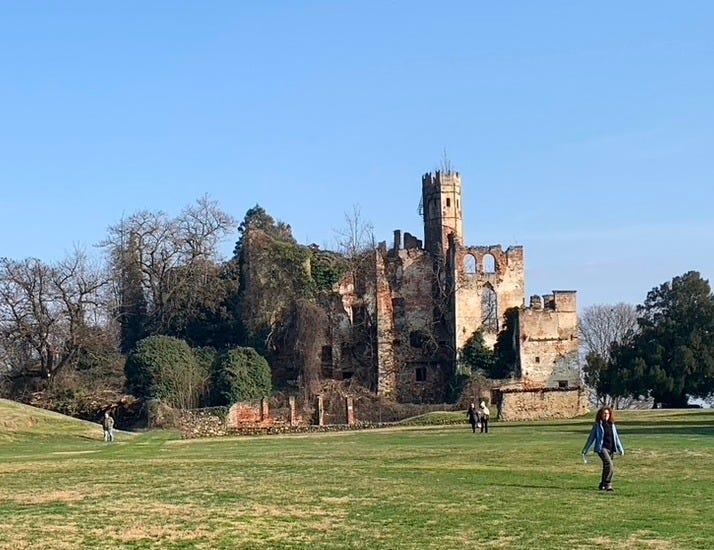
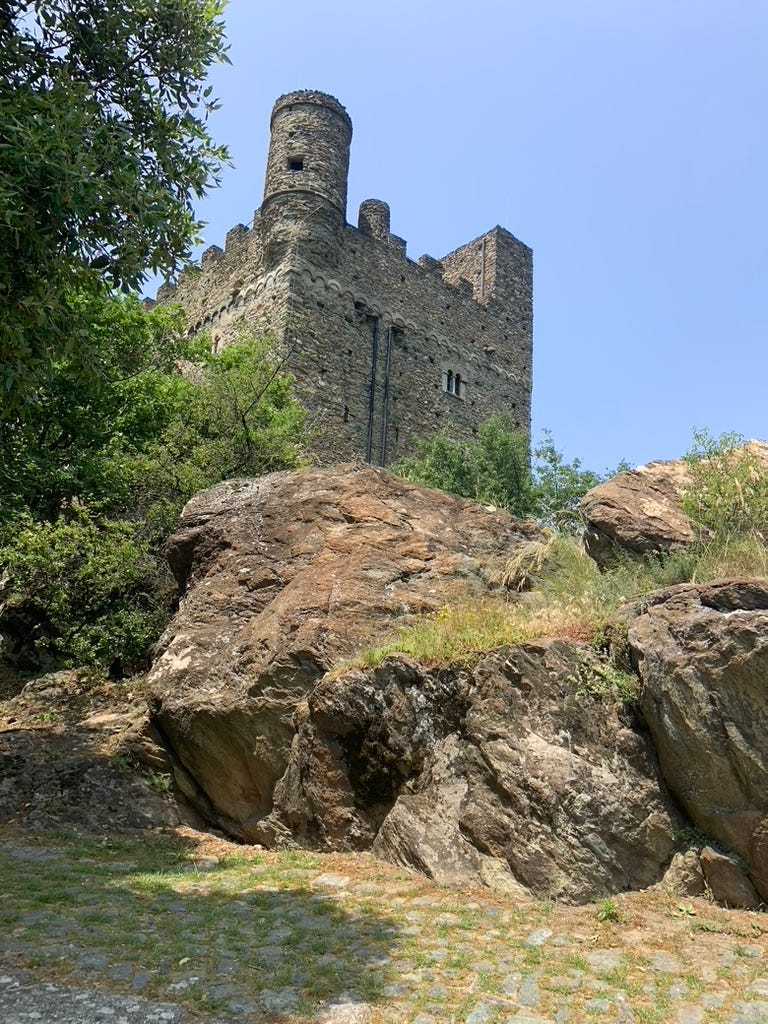
The car had stopped beside us on the hill. We looked up at the ruin—another forgotten Avogadro fortress, crumbling behind rusted gates and NO TRESPASSING signs.
“You can’t,” I said.
The driver nodded and drove off, but the question stayed with me. How do you get in? And more than that: why are there so many castles here that nobody can get into, that nobody even knows about?
It was one of those winter days you wait for all season—actual sunshine, breaking through weeks of fog and rain. I had maybe three hours before the light died, and I was desperate to escape my own head. So I did what any reasonable person does: I opened Google Maps and typed “castles.”
Three popped up. Close together. A loop I could drive in an afternoon.
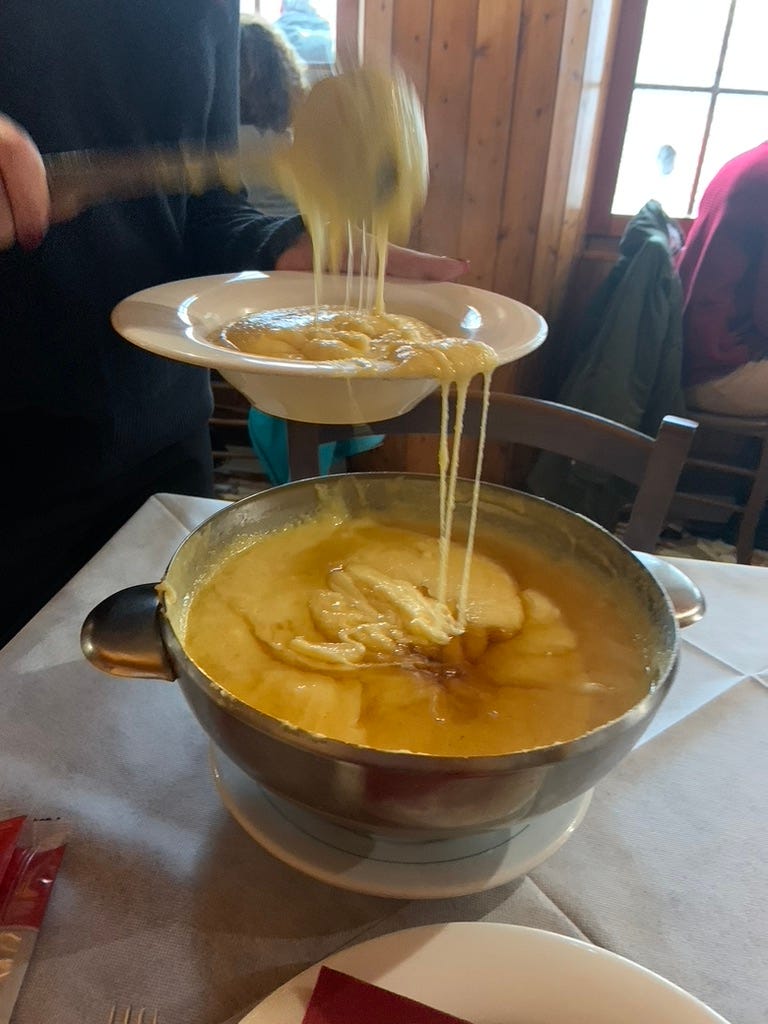
Every year between Christmas and New Year's, my friends and I engage in what has become our sacred ritual: eating our way through Piedmont while pretending we're not just avoiding their in-laws.
Guarded by carved oak against winter's bite, a bas-relief freezes 1400s nobility: stern lords flank ladies in shockingly short tunics. No trailing velvet trains; these hems skim the knee. Why?
This story is my interpretation of the Saint-Pierre bas-relief on a door in the castle. Tourists visiting the castle do not notice its protagonists, and the guides don’t know what to say to you. They did not see it really. But there is an answer: medieval life was not quite the same as we imagine it from the ceremonial medieval pictures.
The October wind had teeth that morning when Caterina de Challant slipped through the postern gate of Ussel, her mare already saddled and stamping in the shadows. Behind her, in the castle’s great hall, her uncle’s men would be arriving within the hour, riding up the main road with documents and armed escorts, ready to strip her of yet another inheritance. But Caterina had learned to read the rhythms of ambush and lawsuit as other women read psalters.
Across northern Italy, some of the oldest stones in the region hold secrets from a distant past, where children were interred with reverence and ceremony.
The path through the woods above Roppolo is carpeted in copper leaves, and the winter light falls thin through the bare chestnuts.
Twenty-six kilometers separate Biella from Ivrea, but they might as well be centuries apart.
I’ve already told you about Ivrea—the city that dreamed outward, that built its utopia around Olivetti’s vision, that wanted the world to see what it had created. Biella chose differently. When the textile industry that defined it for generations disappeared, Biella didn’t dream of the future. It turned inward.
There was once a sign at the city entrance—or maybe it’s a legend that captures the truth better than facts ever could—that read something like: “Welcome to Biella—but no one’s expecting you.” In 2018, statistics confirmed what the sign suggested: Biella was officially Italy’s least attractive city, the place no one wanted to move to.
A Sunday Walk Through 4,000 Years of Mystery (and Wild Boar Territory) in Bessa Natural Reserve, Piedmont
Sunday afternoon, trapped at my computer, the November sun mocking me through the window. Then salvation arrived via email: a package waiting at the Locker. Fifteen minutes there and back, I told myself. Just fifteen minutes.
But the day was impossibly beautiful—that rare late autumn gift when the light turns golden and you can feel winter’s approach making every warm hour precious. I had two, maybe three hours before it got dark. Where could I go?
My friend wasn’t home. The closest option was Vermogno, the Bessa park, where humans have been digging for gold for millennia. I’d walked there dozens of times, at least twice a year, always on the well-maintained trails. But this time, I noticed something new at the trailhead: a sign pointing toward “Percorso delle incisioni rupestri”—the path of prehistoric rock carvings.
What flies away is never truly lost. It only waits to be found again, to catch the light, to rest in someone’s palm and tell its story one more time.
Candelo’s main piazza (square) with one of the Ricetto towers
The archeologist’s trowel scraped through mud in Candelo’s main piazza and stopped. Something caught the light—a flash of silver pressed into earth that had held it for centuries.
He knelt, brushed carefully with fingers that knew how to coax history from dirt. A coin emerged: sesino di Gian Galeazzo, Milano 1390. The viper of the Visconti, fierce and unmistakable, is still visible after 635 years in darkness.
Late spring, 1390. The same piazza, but different.
Yesterday’s rain had finally stopped, leaving the world washed clean. The air tasted sweet. Ginevra emerged from the narrow cobbled street into the brightness of the square, and in her palm lay the sesino—warm from her hand, catching the morning sun like a small promise.
This Sunday, I'll stand in a garden that took 140 years to become what it is. Not because anyone was slow. Because that's how long it takes to grow a masterpiece.
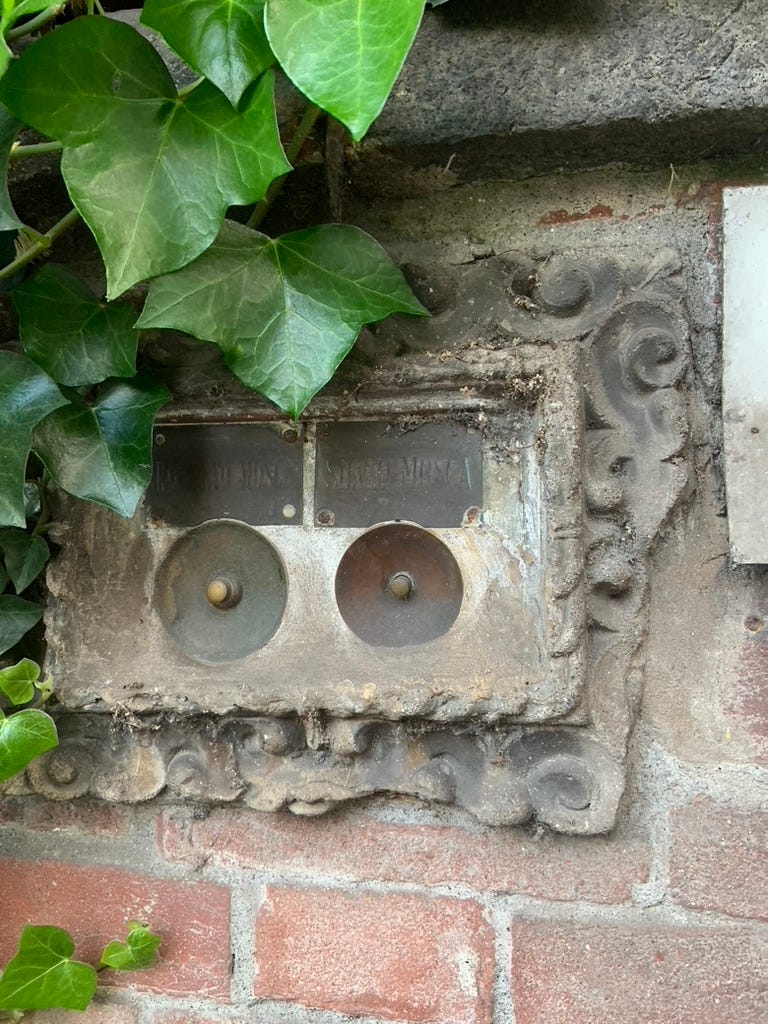
Have you ever seen doorbells like this? Lovely!
I’m volunteering with FAI—Italy’s National Trust—at Villa Silvio Mosca in Biella, a place most tourists will never see.
It sits in the shadow of the Alps, in a town known for wool mills and rain. The kind of place many of us skip on our way to more photogenic destinations. But here’s what they’re missing: a lesson our accelerated world desperately needs.
In 1889, Silvio Mosca—an engineer who’d made his fortune in textiles—stood on a bare plot of land. He could have hired an architect. Instead, he drew the plans himself. For two years, he personally oversaw every stone, every tree placement, every sightline. He planted a cork oak, exotic and improbable in Piedmont’s climate. He positioned cedars where they’d frame the mountains just so. He created artificial hills to make a small garden feel infinite.